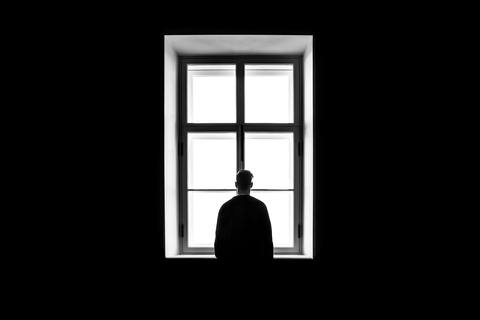
How to Stop Overthinking, the Stoic Way

To stop overthinking the Stoic way, you separate the thought from the fact, judge only what is actually true, and act on the small part you control. Overthinking is the mind chewing on what it cannot change. The Stoics cut it short by pulling attention back to the next real thing in front of them.
It is 2am. You are replaying a text you sent, a meeting from Tuesday, a decision from three years ago.
None of it can be changed by thinking about it harder. You know that. And yet the loop keeps running. Overthinking feels like problem solving, which is exactly why it is so good at quietly eating your life. The Stoics had a clean way to tell the two apart, and a clean way to shut the loop down.
What overthinking actually is
Strip it down and overthinking is two glitches stacked on each other.
The first is a control glitch. You are turning over something you cannot move, the past, other people, an outcome already in motion. The second is a judgment glitch. You are not reacting to what happened. You are reacting to the story you wrapped around it. Lose that second one and most of the spinning stops.
“People are not disturbed by things, but by the views they take of them.”
Epictetus, Enchiridion
The event is neutral. Your take on it is doing the damage. That is good news, because your take is the one thing you can actually edit.
The one move that stops the spiral
Catch the judgment as it happens.
Something occurs. Your mind instantly slaps a label on it. This is a disaster. They hate me. I ruined it. Notice that the label is not the fact. The fact is just “I sent a text and have not heard back yet.” Everything after that is a story you are telling, and you are scaring yourself with your own fiction.
Pull it back to the bare fact. Then ask what, if anything, you can do about that fact right now. Usually it is something small. Sometimes it is nothing, and nothing is a complete answer.
Six ways to break the loop
Pick the one that fits the moment. You do not need all six.
- Strip it to the fact. What actually happened, minus your commentary?
- Run the control test. Can I move this right now, or am I chewing on something already fixed?
- Set a worry window. Give it ten honest minutes, then you are done for the day.
- Do the next physical thing. Stand up, walk, wash a dish. Action breaks rumination faster than logic.
- Ask the friend question. What would I tell someone I love who was stuck on this?
- Write it down once. The mind loops partly to avoid forgetting. Put it on paper and it can stop guarding it.
When the loop is about yesterday or tomorrow
Most overthinking is not even about now. It is regret about the past or dread about the future, and both are places you cannot act.
Marcus Aurelius caught himself doing it and wrote a note back to himself.
“Today I escaped from anxiety. Or no, I discarded it, because it was within me, in my own perceptions, not outside.”
Marcus Aurelius, Meditations
That is the whole trick in one line. The thing tormenting you is not out there. It is a perception you are holding, and you are allowed to put it down.
Thinking less is not caring less
People resist this because they believe the worry is doing something. That if they churn long enough, they will solve it, or at least earn the right to stop.
They will not. Past a certain point, more thinking does not add clarity. It adds noise. The Stoics were not careless people. They were some of the most deliberate humans who ever lived. They just refused to confuse motion with progress. Decide, act on your part, and release the rest. That is not laziness. That is a mind that knows when its job is finished.
Frequently asked questions
Why can’t I stop overthinking?
Usually because the mind treats churning as progress. It loops to feel like it is solving something, even when the matter is fixed or out of your hands. Naming the plain fact and the limit of your control breaks that illusion.
What did the Stoics say about overthinking?
They taught that we are disturbed by our judgments, not by events. Epictetus and Marcus Aurelius both stressed catching the story you add to a fact, then returning your attention to the present and to what you can actually act on.
How do I quiet my mind at night?
Write the worry down once so the mind stops guarding it, name what you can and cannot control, and decide the next small action for the morning. Give the thought a short window, then close it on purpose.
Is overthinking the same as being careful?
No. Careful thinking reaches a decision and stops. Overthinking circles long past the point of usefulness and adds anxiety without adding clarity. The test is simple. If more thought is not changing your answer, you are done.
Get one like it every morning.
Free daily Stoic wisdom — one minute, real practice.