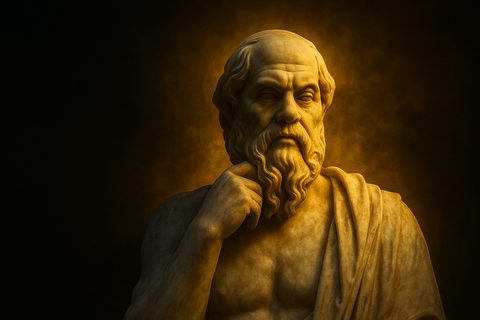
Is Stoicism a Religion or a Philosophy?
Stoicism is a philosophy, not a religion. It has no church, no clergy, no scripture you must believe, and no promise of heaven. It does speak of the divine, but as reason running through nature rather than a god who answers prayers. You practice it. You do not worship it.
People ask this for a fair reason. Stoicism can feel spiritual.
It talks about the universe, about fate, about a kind of order woven into everything. Read enough Marcus Aurelius and you might wonder if you have wandered into a sacred text. So let me draw the line clearly, because it changes how you use the thing.
What makes something a religion?
Usually a handful of ingredients. Worship of a god or gods, a set of required beliefs, rituals, a priesthood, sacred texts, and some claim about what happens after you die.
Stoicism has almost none of that. There is no service to attend, no creed to recite, no afterlife you are working toward, and no one standing between you and the truth. What it offers instead is a method. A way of training your judgment so you live with reason and virtue. That is philosophy’s territory, not religion’s.
What the Stoics believed about God
This is where it gets interesting, because the Stoics did talk about God. They just did not mean what most people mean.
To them, God was not a person on a throne. It was the logos, the rational principle that orders the entire universe, closer to the laws of nature given a kind of mind than a deity with opinions about you. They believed everything was connected and unfolding as it should, and that living well meant living in agreement with that order.
“Conduct me, Jove, and you, O Destiny, wherever your decrees have fixed my station.”
Cleanthes, Fragments
Notice it is nearer to acceptance of fate than a request for favors. The Stoic does not beg the universe to change course. They fall into step with it.
Why it still feels spiritual
Because it deals in the same big questions religion does, and does not flinch from them.
How should I live. What do I do about death. What do I owe other people. How do I find peace. Stoicism walks straight into all of it with calm and seriousness, and that weight can feel religious even when no god is in the room. It offers awe without dogma, meaning without a rulebook handed down from on high.
“I am not born for any one corner of the universe; this whole world is my country.”
Seneca, Letters from a Stoic
That is a spiritual sentiment in a philosopher’s mouth. The feeling is real. The supernatural machinery is not required.
Can you be religious and Stoic?
Easily. This is the part that surprises people.
Because Stoicism makes few hard claims about God and none about an afterlife, it sits comfortably beside most faiths. Plenty of Christians, Jews, Muslims, Buddhists, and atheists practice it without conflict, treating it as a toolkit for living rather than a rival belief. You can keep your religion, or keep none, and still use the dichotomy of control and the four virtues tomorrow morning.
If you want the ground floor, here is what Stoicism is and the four virtues at its core. The idea that everything is connected has its own name, sympatheia, and the practice of embracing fate is amor fati.
Frequently asked questions
Is Stoicism a religion?
No. Stoicism is a philosophy. It has no worship, clergy, scripture, or afterlife, and it requires no belief in a personal god. It is a practical system for living by reason and virtue, which places it firmly in the category of philosophy rather than religion.
Did the Stoics believe in God?
In a sense, yes, but not a personal one. They identified God with the logos, the rational order running through all of nature. It was closer to the universe itself being intelligent than to a deity who intervenes, judges, or answers prayers.
Can you be Christian and Stoic at the same time?
Yes, and many people are. Because Stoicism makes few metaphysical demands, its practices around self control, acceptance, and virtue fit alongside Christianity and most other faiths. It tends to function as a way of life rather than a competing religion.
Is Stoicism spiritual?
It can feel that way. It addresses death, meaning, fate, and our place in the universe with real depth. But it offers that sense of awe through reason and nature rather than the supernatural, so it is spiritual in tone without being religious in structure.
Get one like it every morning.
Free daily Stoic wisdom — one minute, real practice.