How Brainwashing Actually Works (and Why You Don't Notice)
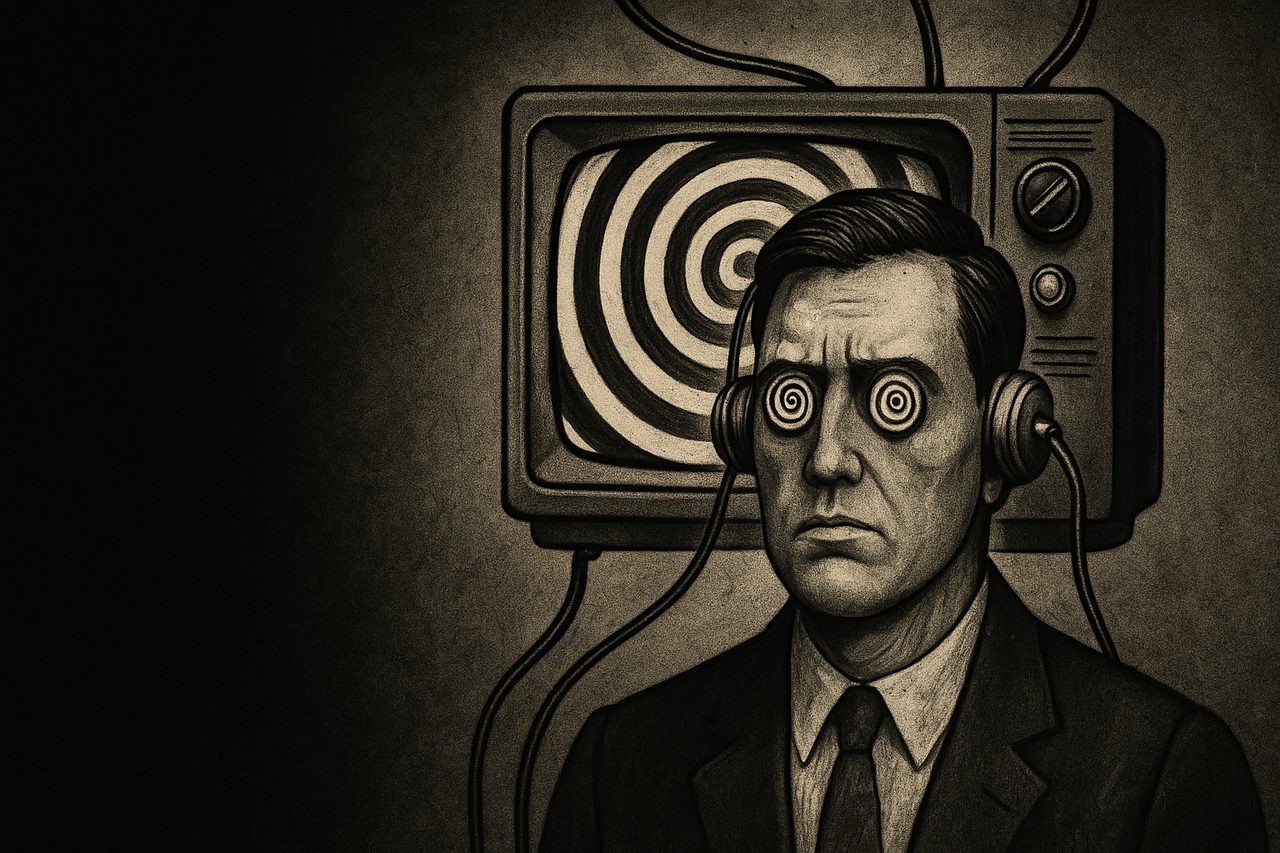
Let me be clear about something first. This is not a conspiracy theory. This is psychology, how the human mind actually works. And once you understand the mechanisms, you start seeing them everywhere. The most successful brainwashing is so seamless that the person never realizes it is happening. They believe every thought in their head is their own.
Most people think brainwashing looks like a dystopian movie, prisoners tortured in dark rooms, cult members chanting together. That is Hollywood. Real influence is far sneakier, far more common, and far more effective than anything on screen.
Here is the uncomfortable claim. If you live in any modern society, a significant portion of what you consider to be you, your preferences, values, and desires, was carefully installed by people you have never met, for purposes you have never considered. Let me show you how.
Information saturation
The foundation of all effective influence is controlling the information environment so completely that alternative views become almost unthinkable. It is not about forcing you to believe something. It is about making that something the only thing available to believe.
Consider how many hours a day the average person spends consuming media. Between television, social media, news, podcasts, and ads, it is often eight to twelve hours, more time than most people spend sleeping. And who controls that flow? A small number of corporations and institutions. They do not need to lie to you, though they sometimes do. They just need to decide what you are allowed to think about.
Take a documented example. In the 1920s, Edward Bernays, who essentially invented modern public relations, was hired by tobacco companies to get women to smoke. Smoking was seen as unladylike at the time, so Bernays staged a parade and had women march while smoking, calling the cigarettes torches of freedom. He linked smoking to women’s liberation. Within a decade, millions of women were smoking, believing they were making a feminist statement, with no idea they were following a script written by a tobacco company.
The mechanisms
That worked because it used the basic mechanics of how beliefs form. There are a few.
The first is repetition. The more often you hear something, the truer it feels. This happens automatically, below conscious awareness. You do not choose to believe something because you heard it a hundred times. You just believe it. So effective influence repeats the same messages, from many sources, until they become background noise.
The second is social proof. Humans are tribal. We decide what is true less by independent analysis and more by watching what everyone around us believes. If everyone seems to accept an assumption, questioning it feels not just wrong but impossible. So influence manufactures the appearance of consensus. It does not matter what people actually think. It matters what they believe other people think.
The third, and most powerful, is that the best influence does not tell you what to think. It tells you what to think about. Every so often a new crisis dominates all coverage. Everyone debates it, picks sides, argues passionately. But they did not choose to care about it. The issue was chosen for them. And the trap is that their passionate engagement convinces them they are thinking independently, when really their attention has been hijacked. You can hold any opinion you like, as long as it is about the topic they picked.
Emotional conditioning
Raw information rarely changes minds. Emotion does. So effective influence attaches strong feelings to ideas, usually fear, but pride, disgust, and righteous anger work too. Once an idea is emotionally charged, rational analysis becomes nearly impossible. People defend emotionally based beliefs even against clear evidence, because questioning them feels like a personal attack.
This is why propaganda always needs an enemy. Not just someone who disagrees, but someone who threatens everything you care about, someone so dangerous that doubting your own side feels like helping them. Once that dynamic is set, people accept almost anything from their side and reject almost everything from the other, regardless of merit.
There is an old experiment that shows how this generalizes. The psychologist John Watson conditioned a baby, Little Albert, to fear a white rat by making a loud, frightening noise whenever the rat appeared. Soon the child feared anything white and fuzzy, rabbits, cotton, even a Santa mask. The fear spread far beyond its cause. Mass conditioning works the same way. You attach an emotional reaction to a symbol or word, and it spreads to related ideas, until people feel strongly about things they have never actually examined.
How to know if it happened to you
The most disturbing part is that the conditioning is so effective people defend it even after you explain it. They insist their beliefs are pure logic, that they reached every conclusion independently, and they get angry at the suggestion otherwise. That reaction is itself part of it. The belief that you are immune to influence is exactly what makes you most vulnerable.
So here are the warning signs. You have strong emotional reactions to certain topics that you cannot fully explain. You find certain ideas not just wrong but literally unthinkable. You assume people who disagree with you are stupid or evil. And you have never seriously considered that your basic assumptions might be incorrect. If any of those apply, congratulations, you are human, and you have been conditioned like everyone who has ever lived in a society.
The way out
I am not saying all social conditioning is bad. Some of it is necessary for a society to function. The problem is when the conditioning serves interests that are not your own.
The solution is to become conscious of how these influences work, so you can judge whether the forces in your life are serving you or using you. Ask three questions about any belief or feeling. Who benefits when I believe this? Who benefits when I feel this way? Who benefits when I spend my attention here instead of somewhere else? And most importantly, deliberately seek out sources you disagree with, not to agree with them, but to see how different information environments produce different realities in people’s minds.
The mind that can be hijacked can also be freed. But first you have to admit it was hijacked. Brainwashing only works as long as you do not know it is happening. The moment you see the mechanism, you can begin to resist it.
Get one like it every morning.
Free daily Stoic wisdom — one minute, real practice.